
Introduction
Thai massage is a hands-on style that blends steady pressure with guided stretching, often focusing on hip mobility.
This article explains Thai massage basics, hip and low back sensations, and safety pointers.
Why hips matter in daily life
Also, tight hips can change how you walk, stand, and climb stairs, so your low back may work harder.
When you sit for long hours or wear unsupportive shoes, hip muscles may feel stiff the next morning.
However, Thai massage is not a medical fix, but it can support comfort and easier movement.
How This Is Commonly Described
Words people often use
For example, people often say their hips feel “tight,” “locked,” or “pinchy” when they stand up.
Also, some describe a “pull” in the front of the hips after sitting, especially during the first steps.
When the glutes feel tired, the low back may feel achy after housework or long standing at work.
However, these labels describe sensations, not a diagnosis, so patterns can differ by person.
How Movement, Pain, or Stiffness May Be Experienced
Common patterns around the hip joint
Because of this, hip stiffness may show up as shorter strides, a guarded squat, or a twist that feels limited.
When hip flexors at the front feel shortened, you might notice extra pressure in the low back while walking.
Also, side-hip tension can make sleeping on one side uncomfortable, so you keep switching positions.
After a workout, you may feel delayed soreness, and gentle movement often feels better than stillness.
However, sharp pain, numbness, or weakness can signal something else and deserves a careful check.
How Care Is Commonly Approached (General Overview)
Simple steps that pair well with bodywork
Also, many people start with basic habits like standing up every hour and taking a short walk.
When you add light hip strength, like bridges or side steps, your hips may feel steadier over time.
For example, a warm shower before morning chores can ease stiffness, while a short stretch can reset posture.
However, if pain keeps returning, a licensed clinician can assess gait, strength, and joint mobility.
Because of this, care often works best as a mix of movement, rest, and support from trained pros.
Massage Therapy’s Supportive Role
What Thai massage may support
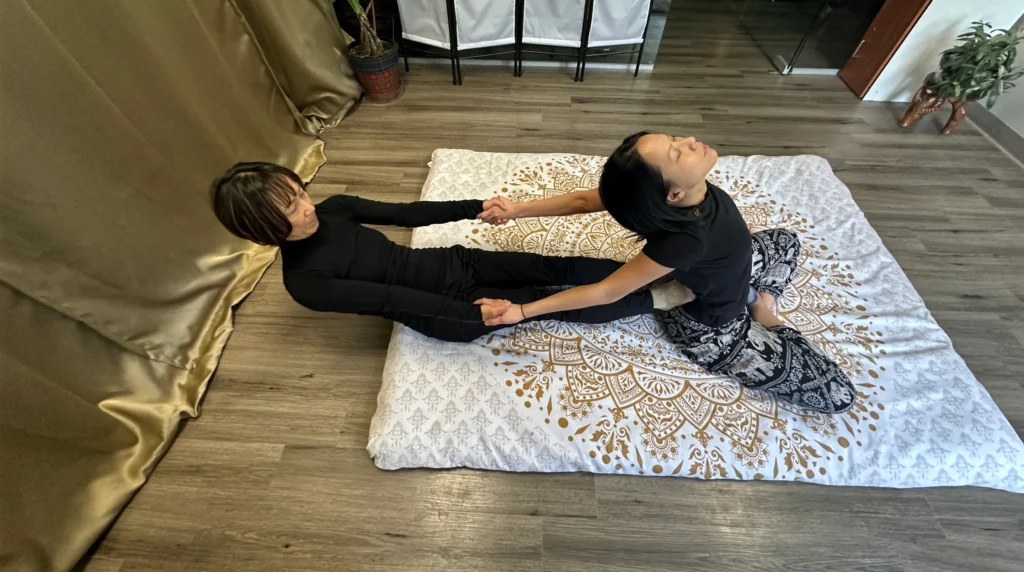
Also, Thai massage is often done on a mat with comfortable clothes, and the therapist guides passive stretches.
When the therapist works around the hips, they may use palms, forearms, or gentle rocking for steady pressure.
This means your body can relax while the hips move through a range that feels safe and controlled.
However, intensity matters, so you can ask for less stretch, slower pacing, or a different position anytime.
After a session, mild soreness is possible, so hydration and an easy walk can feel supportive.
Safety Considerations & When to Seek Professional Care
When to pause or modify
However, Thai massage can involve strong stretching, so it may not fit everyone at every time.
If you are pregnant, have osteoporosis, uncontrolled blood pressure, or a history of blood clots, check with a clinician first.
Also, if you take blood thinners or bruise easily, ask for lighter pressure and avoid aggressive techniques.
When you have fever, active infection, new swelling, or a recent injury, it is often safer to reschedule.
After any session, seek prompt care if you notice chest pain, sudden shortness of breath, severe headache, or new numbness.